English
 中文简体
中文简体
As overseas infrastructure, industrial parks, and complex-environment projects continue to expand, the limitations of traditional fire pump house construction are becoming increasingly apparent. Long construction periods, heavy on-site civil works, and complicated coordination requirements often create major challenges. In high-altitude regions, remote areas, and overseas projects, limited construction conditions, labor shortages, and low installation efficiency can further increase project difficulty. Against this backdrop, integrated fire pumping stations are gaining wider adoption due to their modular design, prefabricated installation approach, intelligent control systems, reduced civil work requirements, and shorter construction timelines.
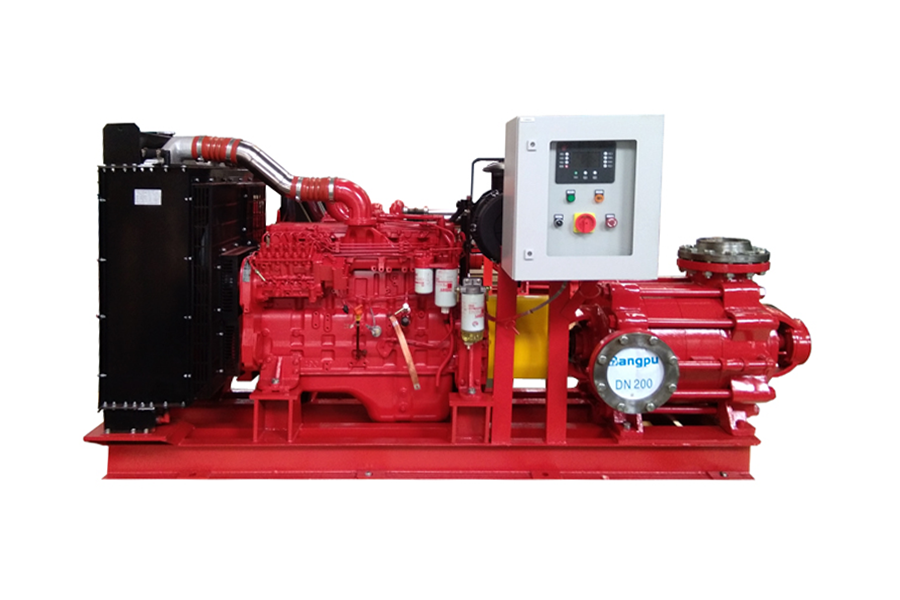
Unlike the traditional model of “fire water tank + separate pump house,” an integrated fire pumping station uses an assembled water tank to replace the conventional concrete fire water reservoir, while integrating fire pumps, pressure stabilization equipment, control systems, and piping into a centralized layout through standardized design.
During project implementation, the sectional water tank is assembled on-site, while fire pumps, pressure stabilization units, and supporting pipelines are installed and integrated simultaneously. This approach eliminates the need for constructing a separate traditional pump house, significantly reducing on-site construction complexity and improving overall project efficiency.
Another key advantage of the integrated fire pumping station is its adaptability to different operating environments. Equipment configuration can be adjusted according to actual site conditions and climate requirements. For high-altitude regions such as Tibet, plateau motors can be selected to ensure stable equipment performance under low air pressure conditions. In cold climates, anti-freezing measures such as insulation systems and electric tracing can be incorporated, while in tropical or high-humidity environments, rainproof and moisture-resistant designs can be applied to improve long-term operational reliability.
In terms of system operation, the integrated fire pumping station is equipped with an intelligent control system capable of automatic start-stop control, equipment interlocking, operational monitoring, and fault alarm functions, improving both system reliability and management efficiency. To ensure smooth project delivery and stable operation, professional technical personnel are also dispatched to the project site for installation guidance, commissioning, and operational testing, enabling the system to be put into service quickly and reliably.
Compared with traditional solutions, this type of system can substantially reduce civil construction workload, shorten installation schedules, and minimize dependence on local construction conditions. These advantages become even more significant in overseas projects, mining sites, municipal engineering, and industrial facilities. In recent years, similar solutions have been successfully applied in projects located in Tibet and the Democratic Republic of the Congo, demonstrating strong adaptability and efficient deployment capabilities under challenging environmental conditions.
As modern engineering continues to move toward standardized, modular, and intelligent construction methods, integrated fire pumping stations are evolving from a standalone equipment solution into a more efficient and modern approach to fire protection system construction.



 Home
Home